Gorilla Trekking in Volcanoes National Park
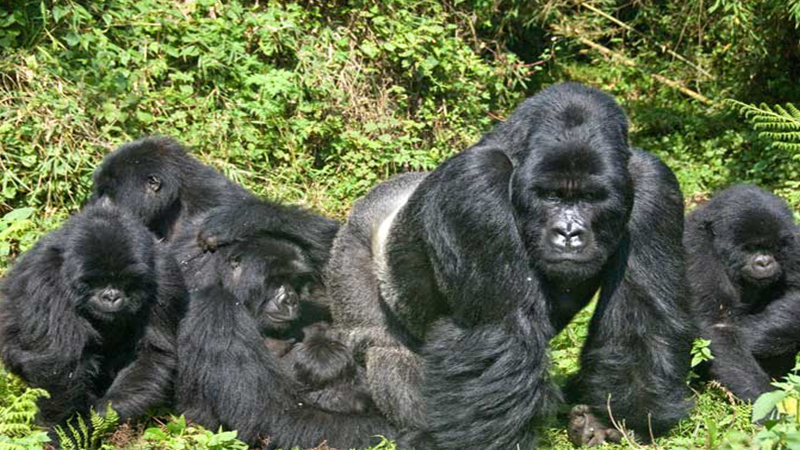
Gorilla trekking in Volcanoes National Park Rwanda
Gorilla Trekking in the Volcanoes National Park is popular because Rwanda is considered by some to be the best place to see gorillas in Africa. The park is home to the intriguing but endangered mountain gorillas. Mountain gorillas are found in only 3 countries – Rwanda, Uganda and the Democratic Republic of Congo.
The Volcanoes National Park covers an area of about 16,000 hectares and is found in the northwestern part of Rwanda. It consists of afro-montane forests, bamboo forests, savanna grassland, vast swamps and 5 volcanoes (Bisoke, Gahinga, Muhabura, Sabyinyo and Karisimbi). Mount Karisimbi is one of the four tallest mountains in Africa. The Volcanoes national park is home to the spotted hyena, buffaloes, elephants, bush bucks, duikers and golden monkeys among many other mammals.
Cost of gorilla trekking in the Volcanoes National Park
To have a gorilla trekking in Volcanoes National Park experience, travelers need to book and purchase gorilla trekking permits way in advance as these permits are very few and on high demand. At least 3-4 months in advance is advised for one to be guaranteed of getting one. Gorilla trekking permits in Volcanoes National Park cost $1,500 per person per trek, including the Rwanda nationals. Part of the revenue collected from gorilla trekking permits goes to the support of the gorilla conservation effort and supporting the local community. Booking gorilla permits can be done through a trusted tour operator or directly from the Rwanda Development Board in Kigali. Passport details of a traveler is what is required to be presented to the RDB when purchasing a gorilla tracking permit. Only 8 people can trek a single gorilla family per day, meaning there are only 80 gorilla permits available per day and to secure your gorilla permit for the exact date you wish to track in, travelers are strongly advised to book in advance.
How is gorilla trekking in the Volcanoes National Park like?
Gorilla trekking in Rwanda starts with a briefing from the park authorities and Rangers at around 7:30am. During the briefing, participants are divided into groups and assigned to a particular gorilla family. The less fit hikers are assigned groups which are closer to the park offices. At 8:00am, the park Rangers lead the group to search for the gorillas. As already noted earlier, gorilla trekking in Rwanda offers you 10 habituated groups/families to choose from. Regardless of which group you eventually get, you will find the experience amazing. You could spend hours just watching the little ones roll around and play. Mountain gorillas are always playful and quite curious. Some may walk right up to you but with no harm intended. While with the gorillas, it’s important to listen to instructions from your Guides and to always stay calm. Never make sudden movements. Gorilla tracking in Rwanda can take between one to six hours depending on the gorilla group you are assigned and their specific location on the day of the trek.
How to prepare for Gorilla Trekking in Volcanoes National Park Rwanda
- Prepare in advance physically and mentally by taking long walks in nearby forests.
- Acquire suitable footwear to navigate through the sometimes challenging terrain.
- Come knowing it may rain heavily.
- Pack enough drinking water and light snack.
- Give tip to the park Rangers and guides whenever you can – They do a lot to make your gorilla tracking adventure worthwhile. The recommended tipping rate is between $10 and $15 or its equivalent in the local currency.
Like all activities, gorilla trekking in Rwanda has rules and regulations. You must be 15 years and above to go near the primates. The reason why children aren’t allowed near the gorillas is because they tend to carry transmittable diseases like flue and cough which can be transmitted to the primates. It is one of the reasons why tourists are required to share their passport details before booking a trip. Mountain gorillas are endangered and only 1,000 remain in the wild. All steps are taken to protect them from diseases. Anyone with a communicable disease cannot be allowed near the primates. Mountain gorillas are not immune to some of the infections we carry as humans.